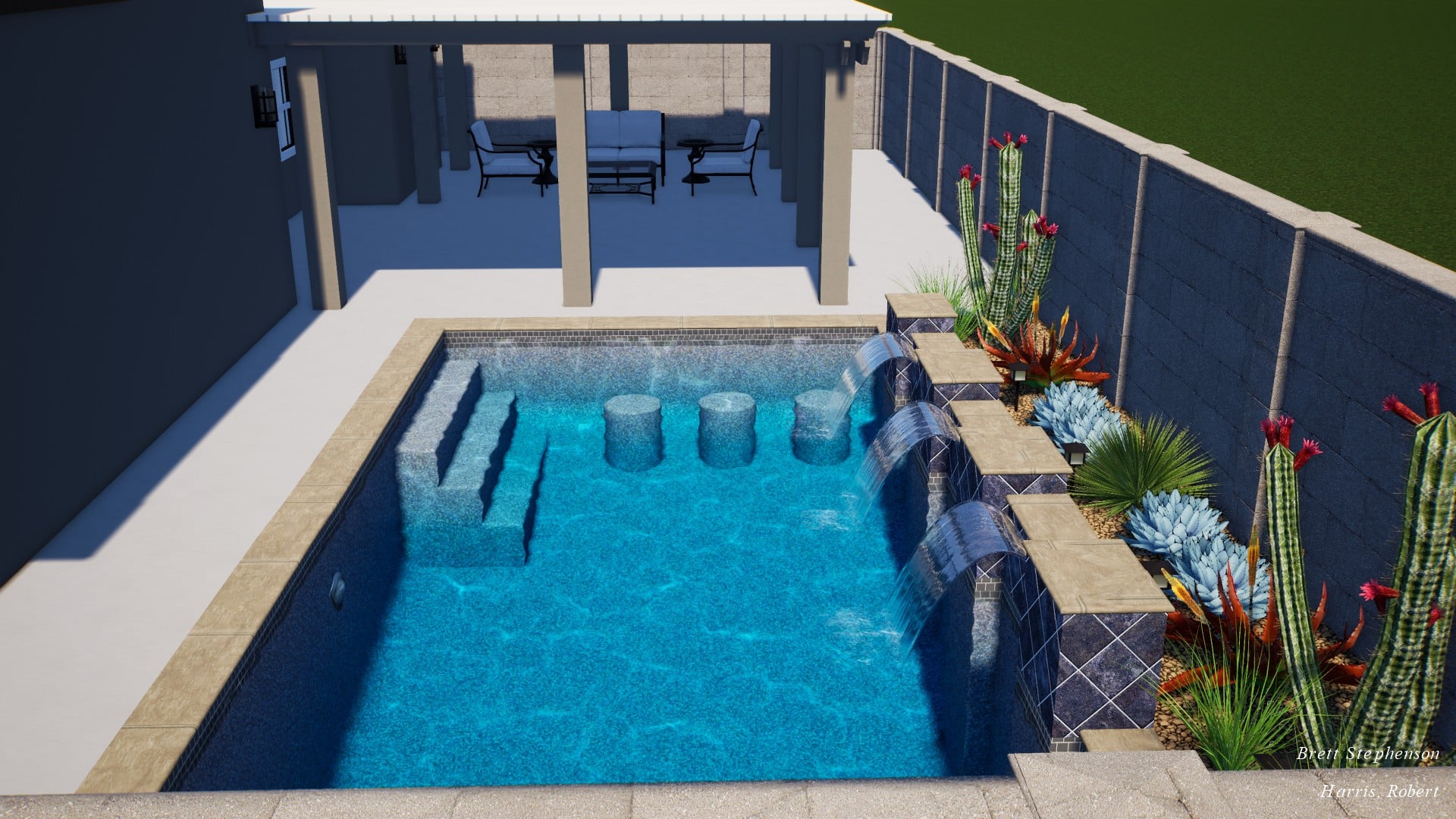
If you’re thinking about building a new pool, you’re probably wondering what the cost of owning and maintaining a swimming pool is. You’re in the right place to find out.
Choosing to build an in-ground pool is a significant decision. Pool ownership should be carefully considered and researched so you’re not caught off guard by expenses, replacement costs, or pool companies that offer more than they can deliver.
Before we go any further, it’s important to note that having a swimming pool is a wonderful thing. It transforms your yard into a backyard oasis that offers entertainment and relaxation year-round. Our goal is not to scare you away from owning a pool by any means. We simply want you to have all the information necessary to make the best possible decision for yourself and your family.
The post-installation cost of owning a pool breaks down into three main areas:
- Maintenance
- Repairs
- Energy Usage
You can’t escape these expenses no matter what you do. However, there are things you can do to make sure repairs are minimal, such as ensuring regular, scheduled maintenance (you can schedule it out ahead of time to make sure maintenance isn’t delayed or forgotten), and your energy usage is as little as possible (an energy-efficient pool pump is always a good idea). Additionally, all of these costs vary based on your pool size, climate, and whether you’re using professional services.
If you’re feeling overwhelmed, don’t stress. We’re here for you. Just keep reading.
Initial Installation Price Range
Just because installation is an up-front cost doesn’t mean it should be ignored when it comes to your budget. The biggest factor when considering installation is the wide price range. Depending on your choice of material, size, shape, features, and more, you could easily see prices ranging from $30,000 to well over $100,000. Material is usually the biggest factor, with concrete pools on the higher end and vinyl pools on the lower end.
Regardless of how big your plans are, there are ways that you can save money on installation. For example, DIY Pools and Spas helps you take the lead on your project and saves you a minimum of $20,000 simply by giving you the tools you need. Trust us when we say that your dream pool is within reach.
Pool Maintenance Costs
Pool maintenance is the thing that most potential inground pool owners get hung up on. It’s a lot to think about, no doubt, but it’s certainly manageable.
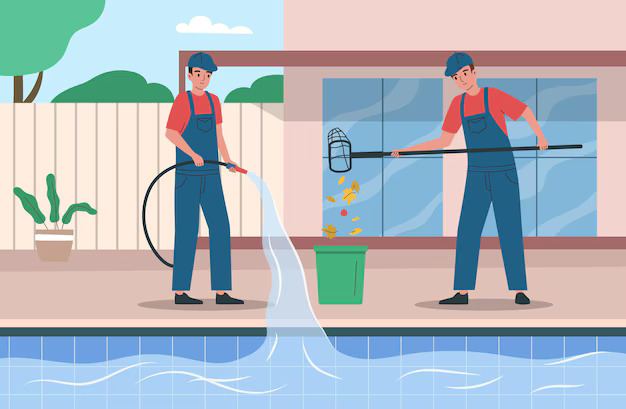
You will need to become aware of many things you’ve probably never thought about before, such as regular cleaning, equipment servicing, and chemical balancing, but there are options. You can choose between DIY maintenance and hiring professional pool cleaning services. Hiring it out is, of course, more expensive.
Here’s a glance at what that might look like:
If you hire a full-service pool company to come out every month and do things like clean filters, balance your pool water chemicals, and perform inspections, you could end up spending anywhere between $100 and $250 a month on ongoing maintenance costs.
If you want to do it on your own, learning how is definitely achievable. In fact, it’s pretty common for pool owners to handle their own routine maintenance. It does require a few hours a week of your time once you find a routine that works for you, but many find it worthwhile to save some money. Doing the maintenance yourself will bring the average cost down to around $80 a month.
If you multiply these numbers by 12, you end up with around $1k-$3k in maintenance costs per year. This number can go up or down depending on your area, your requirements, and unexpected costs. It’s really important that you work these variables into your calculations so that you’re not surprised by expenses you hadn’t considered.
Pool Water Monitoring
Monitoring your pool water is very important. Beyond chemical balancing (which we’ll get to in a minute), you’ll want to take steps to ensure you and your loved ones have the most enjoyable swimming experience possible. This means regular pH and temperature testing, and potentially investing in water-testing kits.
- pH Testing: This helps you monitor the chemical levels in your pool so you know which adjustments are needed.
- Thermometer: A thermometer goes a long way toward helping you have a comfortable swimming experience.
- Water Testing Kits: These comprehensive kits will give you an in-depth analysis whenever you feel like it. It will tell you all your chemical levels, allowing you to make precise changes.
You might also consider a pool cover to minimize water evaporation, keeping your pool cleaner and helping your efforts last longer. Remember that everything you do to protect your pool water quality helps extend the life of your pool and protects your health.
Essential Pool Chemicals
Pool chemicals are a whole category on their own, and they can cost anywhere from $50 – $100 monthly, which means $600 – $1,200 annually. Most pools need chlorine, muriatic acid, soda ash, and potentially other treatments to keep the water crystal clear and your equipment running smoothly. If you’re going to tighten the budget anywhere, you probably don’t want to do it here.
Chemicals keep your water hygienic and prevent fogging. If you don’t create and maintain a treatment routine, your pool can get gross very quickly. In fact, your swimming season may be even shorter than that of public pools if you choose to neglect the chemical treatments that keep your pool water balanced.
Common Repairs
Beyond monthly pool maintenance, you will likely encounter some common repairs. The fact is, things break and wear out. It’s only scary if you don’t plan for it, so let’s go over some of the things you can expect.
Pool filters need to be replaced every 1-7 years, depending on the type and quality you choose. Since they’re what keep your pool water clean, you can’t skip this. Based on the factors just mentioned, you could be looking at a cost of $50 to $300 each time.
A pool pump will usually last you 8 to 12 years as long as it’s properly maintained, and it will cost around $1,500 to $2,000 to replace. Repairs for the pump will usually run between $200 and $800, depending on the type of pump and what needs to be fixed.
Pool resurfacing isn’t so much a repair as it is maintenance, but it does have to be done every decade or two, depending on the material you choose for your pool. This resurfacing will cost between $8,000 and $12,000, meaning it’s definitely something you should save up for.
You can keep these costs to a minimum by ensuring all regular maintenance is done on time (whether by you or a pool service company), investing in energy-efficient equipment to keep energy costs down, and choosing high-quality equipment from the start.
General Cost of Owning a Pool
With so much variance in pool equipment, electricity costs, features, and materials (down to your pool surface), it’s impossible to tell you exactly what you will be paying every year to keep your pool in tip-top shape. That being said, it’s not uncommon for homeowners to spend between $3,000 and $6,000 a year on maintenance, repairs, and services. With proper planning and budgeting, many homeowners are able to enjoy a beautiful and safe swimming environment that’s exclusive to their family and accessible year-round.
We believe a pool is well worth the monthly upkeep and ongoing expenses. When your family and friends gather around your home’s beautiful in-ground pool, you’re getting memories you can’t replace, bonds that grow stronger every day, and lives filled with many hours of laughter and joy.